Introduction
Georgia is beautiful. Georgia is also brutal on houses. Summer humidity regularly exceeds 80%. Afternoon thunderstorms dump inches of rain in minutes. Temperature swings from 95-degree July afternoons to freezing January nights stress every material in the building envelope.
A custom home that simply meets Georgia building code survives these conditions. A high-performance custom home ignores them entirely, maintaining cool, dry, quiet interiors while the climate does its worst outside.
The difference between code-minimum construction and high-performance building is not about luxury finishes or square footage. It is about the invisible systems behind the walls: how air moves, where moisture collects, and how the building envelope protects the investment for decades. This guide covers what Georgia custom home buyers need to understand about high-performance construction and why it matters more at the lake than anywhere else.
Why Code-Minimum Construction Falls Short in Georgia
Building codes establish the legal minimum. They exist to prevent structural failure, fire hazard, and basic safety issues. They do not optimize for comfort, energy efficiency, long-term durability, or the specific challenges of lakefront living in a subtropical climate.
In Georgia, code-minimum construction often produces homes that:
Run HVAC systems constantly to manage humidity, resulting in high energy bills and uneven comfort between rooms.
Develop moisture problems in crawlspaces, wall cavities, and attic spaces leading to mold, wood rot, and air quality concerns within the first five years.
Allow exterior noise from boats, lawn equipment, and storms to penetrate living spaces, reducing the sense of retreat that lake living promises.
Age faster than their price tag suggests, with premature paint failure, siding deterioration, and window seal breakdown driven by moisture cycling and UV exposure.
High-performance custom homes in Georgia address every one of these issues at the design and construction phase, not as expensive repairs after move-in.
The Four Pillars of High-Performance Building in Georgia
1. Advanced Air Sealing
Air leakage is the single largest source of energy loss and moisture intrusion in residential construction. Every gap around windows, at electrical penetrations, where framing meets the foundation, at recessed light housings allows conditioned air to escape and humid exterior air to enter.
High-performance custom home builders in Georgia treat air sealing as a system, not a checklist item. This means:
Continuous Air Barrier: A defined, unbroken boundary between conditioned and unconditioned space that wraps the entire building envelope. This barrier is detailed at every penetration, transition, and intersection not just at the obvious gaps.
Blower Door Testing: Pressurizing the home and measuring air leakage in cubic feet per minute provides an objective, measurable standard for air-tightness. High-performance homes achieve significantly lower leakage rates than code requires.
Sealed Attic and Crawlspace Strategies: In Georgia’s climate, bringing the attic and crawlspace inside the conditioned envelope rather than venting them to the exterior dramatically reduces moisture problems and improves HVAC efficiency.
2. Moisture Management
Moisture is the enemy of every home in Georgia, and the threat is three-dimensional: rain penetrates from outside, humidity migrates through the building envelope, and daily activities (cooking, bathing, breathing) generate moisture inside.
High-performance moisture management addresses all three sources:
Rain Control: Properly detailed window flashing, kick-out flashing at roof-to-wall intersections, and a drainage plane behind all cladding materials ensure bulk water sheds away from the structure. At Lake Oconee, where afternoon storms are a near-daily summer occurrence, rain control details are non-negotiable.
Vapor Management: Understanding which direction moisture drives through walls and roof assemblies in Georgia’s climate predominantly from the hot, humid exterior toward the cool, dry interior determines where vapor barriers and permeable membranes belong. Getting this wrong traps moisture inside wall cavities, where it causes invisible damage for years.
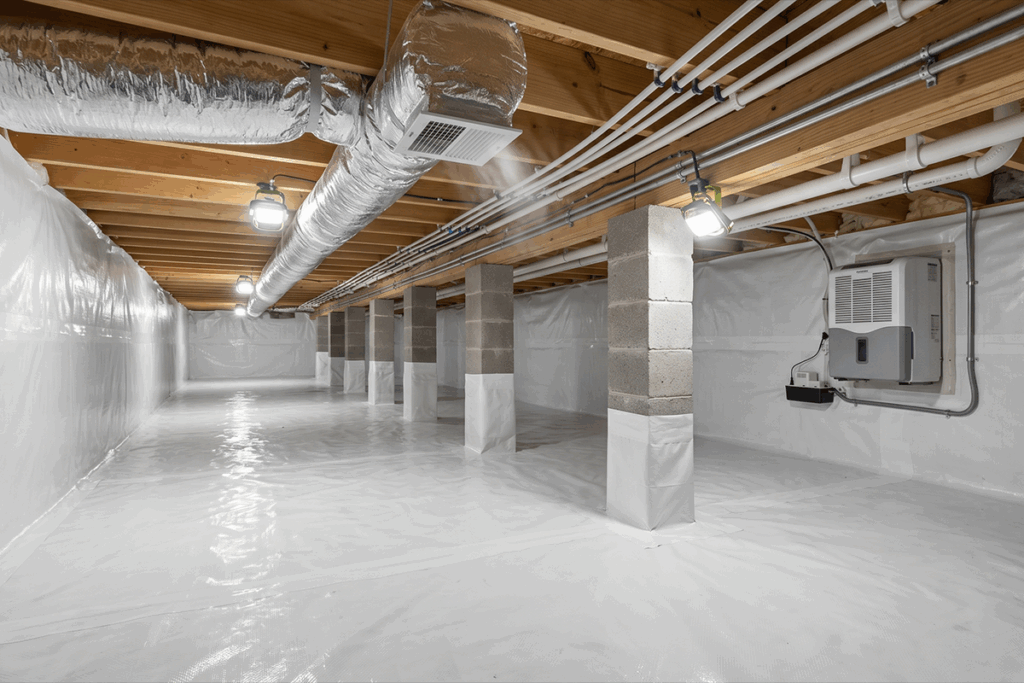
Foundation and Crawlspace Protection: Moisture-controlled crawlspaces with sealed ground covers, insulated walls, and conditioned air supply prevent the damp, musty conditions that compromise air quality and structural integrity. For lakefront homes in Greensboro, GA, where water tables can be high and humidity is constant, crawlspace moisture management is especially critical.
3. Right-Sized HVAC with Dedicated Dehumidification
The most common HVAC mistake in Georgia custom homes is oversizing. A system that is too large cools the air quickly but shuts off before it has time to remove moisture. The result: a home that feels clammy even when the thermostat reads 72 degrees.
High-performance HVAC design for Georgia custom homes includes:
Manual J Load Calculations: Room-by-room heating and cooling load analysis based on the actual building envelope not rules of thumb or square footage estimates. A well-sealed, well-insulated home requires significantly less HVAC capacity than a code-minimum structure of the same size.
Dedicated Dehumidification: A standalone dehumidification system operates independently of the air conditioning, maintaining indoor relative humidity between 45% and 55% regardless of outdoor conditions. This is the single most impactful comfort upgrade in a Georgia lake home.
Zoned Distribution: Separate HVAC zones for different areas of the home main living, primary suite, guest wing, lower level allow precise temperature and humidity control without conditioning unoccupied spaces.
4. High-Performance Windows and Insulation
Windows represent the weakest point in any building envelope. In Georgia, they must manage solar heat gain, UV exposure, condensation potential, and air leakage simultaneously.
Low-E Coatings and Gas Fill: Spectrally selective low-emissivity coatings reduce solar heat gain without darkening the view critical for lake-facing walls with large glass expanses. Argon or krypton gas fill between panes improves thermal performance.
Proper Installation Details: A high-performance window installed with poor flashing, inadequate shimming, or missing sealant performs no better than a standard window. Installation quality matters as much as the window specification itself.
Insulation Continuity: Thermal bridging heat transfer through framing members that bypass insulation reduces the effective R-value of the entire wall assembly. High-performance Georgia custom homes use continuous exterior insulation or advanced framing techniques to minimize thermal bridging and maintain consistent temperatures across all wall surfaces.
Why High-Performance Matters More at the Lake
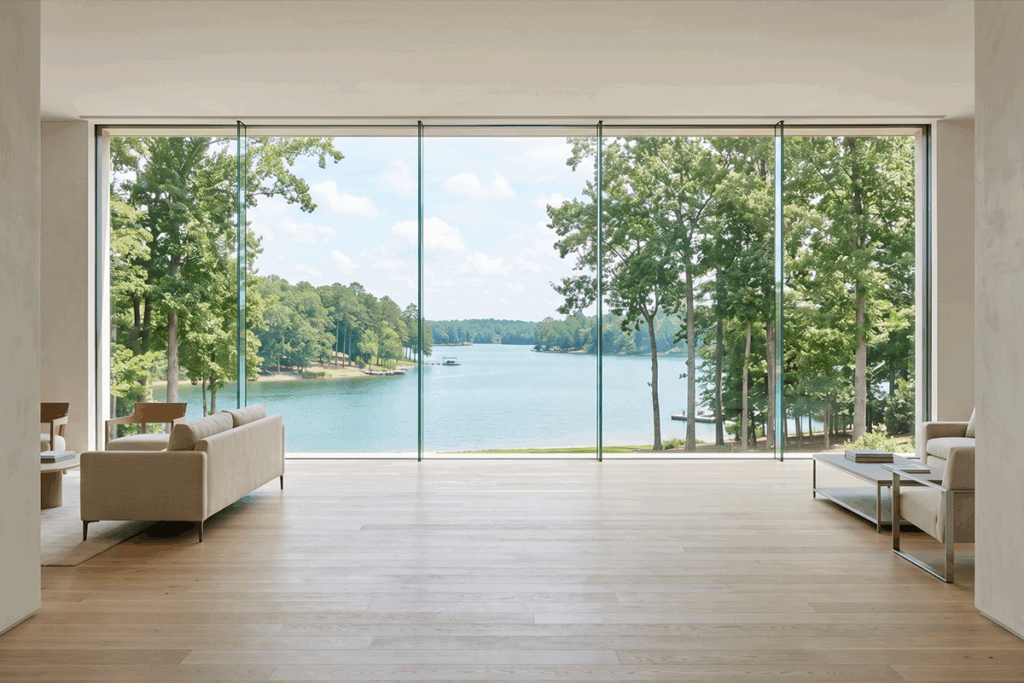
Lakefront homes at Reynolds Lake Oconee face amplified versions of every climate challenge. Proximity to the water increases ambient humidity. Open water exposure intensifies wind-driven rain. Southern and western orientations the most desirable for lake views receive the most aggressive solar heat gain.
Homes with large glass walls facing the lake, expansive outdoor living spaces with frequent door openings, and lower levels built into the slope near the waterline need building envelopes and mechanical systems that perform well beyond code minimums.
The investment in high-performance building pays returns in three categories:
Comfort: Even temperatures, controlled humidity, and quiet interiors in every room, in every season.
Durability: Materials and assemblies that resist moisture damage, reducing long-term maintenance costs and protecting resale value.
Energy Efficiency: Right-sized systems operating in a well-sealed envelope consume significantly less energy than oversized systems fighting constant air and moisture leakage.
Questions to Ask Any Georgia Custom Home Builder
Not every builder who claims to build “high quality” actually builds high performance. These questions separate the two:
What is your air sealing strategy, and do you conduct blower door testing? A builder committed to air-tightness can describe their approach in detail and provide test results.
How do you manage crawlspace moisture? The answer should involve sealed crawlspaces with conditioned air not vented crawlspaces with vapor barriers on the ground alone.
Do you use dedicated dehumidification separate from the HVAC system? In Georgia, the correct answer is yes.
What type of load calculation do you use to size HVAC systems? Manual J is the standard. “We go by square footage” is a red flag.
How do you detail window and door flashing? A high-performance builder can walk through their flashing sequence and explain why each layer matters.
Key Takeaways
Air Sealing: A continuous air barrier, blower door tested, is the foundation of every high-performance home in Georgia.
Moisture Control: Rain management, vapor management, and crawlspace conditioning work together to protect the structure and indoor air quality.
HVAC Sizing: Right-sized systems with dedicated dehumidification outperform oversized systems in comfort, efficiency, and humidity control.
Windows: High-performance glazing paired with meticulous installation details manages solar gain, condensation, and air leakage on lake-facing walls.
Lake Amplification: Lakefront homes face intensified humidity, wind-driven rain, and solar exposure making high-performance building practices essential rather than optional.
Build a Home That Performs as Well as It Looks
Southern Luxury Homes builds every custom home in Greensboro, GA, to high-performance standards because beautiful finishes deserve an equally rigorous building envelope behind them. If you expect your lake home to stay cool, dry, and quiet for decades, call (404) 668-7674 or email info@southernluxury.com to discuss your project.
Frequently Asked Questions
What does “beyond code” mean in custom home construction? Building beyond code means exceeding the minimum requirements set by Georgia building codes in areas like air sealing, insulation, HVAC design, and moisture management. The result is a home that performs better in comfort, durability, and energy efficiency.
Why is dehumidification important in a Georgia lake home? Georgia’s high humidity can make homes feel clammy even when air conditioning is running. A dedicated dehumidification system maintains indoor relative humidity independently of the cooling system, ensuring consistent comfort year-round.
How do I know if my crawlspace is properly moisture-controlled? A properly moisture-controlled crawlspace is sealed to the exterior, insulated, and receives conditioned air from the home’s HVAC system. Vented crawlspaces with exposed ground are outdated in Georgia’s climate and lead to moisture problems.
Do high-performance features add significant cost to a custom home? High-performance building practices typically add 3–7% to construction costs compared to code-minimum building. The investment is offset by lower energy bills, reduced maintenance, and significantly improved comfort and durability over the life of the home.
What is a blower door test? A blower door test uses a calibrated fan mounted in an exterior doorway to pressurize the home and measure air leakage. The result, measured in air changes per hour, provides an objective assessment of how well-sealed the building envelope is.
About the Author
Southern Luxury Homes is led by Kevin Aycock, a 20-year veteran of the custom construction industry and a UGA Bulldog 100 honoree. Southern Luxury Homes is the authority on high-end living at Reynolds Lake Oconee. Based at 1011 Park Place Blvd, Greensboro, GA, our team specializes in homes that are “Built for Life.”High-performance building is a standard, not an upgrade, on every home our team delivers. Call (404) 668-7674 or visit southernluxury.com to learn how our approach protects your comfort and your investment.